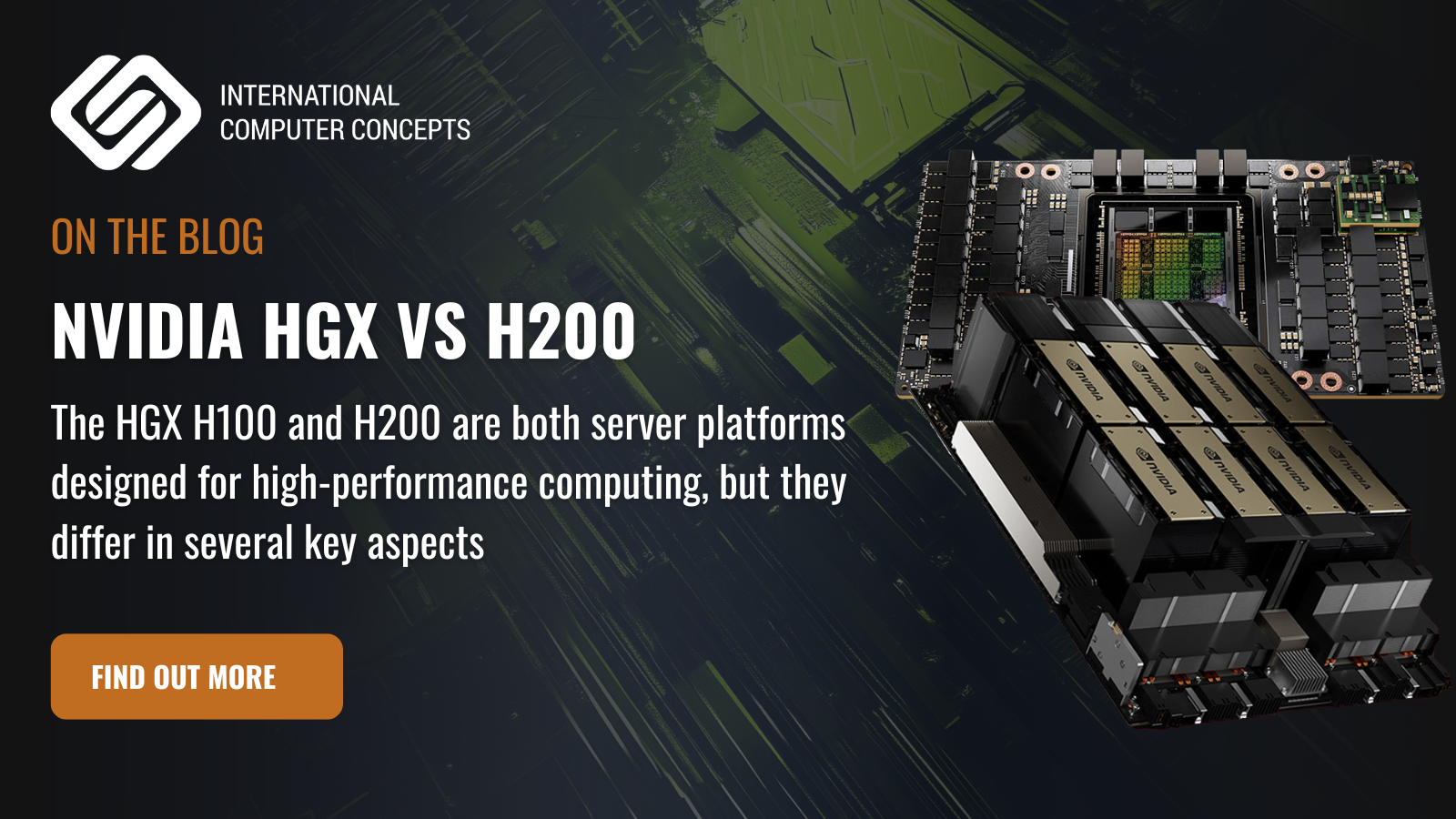
The HGX H100 and H200 are both server platforms designed for high-performance computing, but they differ in several key aspects:
Architecture:
H100: Based on the Hopper architecture, it's designed for AI and high-performance computing workloads, providing significant improvements in performance for machine learning tasks compared to previous generations.
H200: Built on a newer architecture (likely the Helios or similar), offering enhanced performance, efficiency, and features optimized for the latest AI models and workloads.
Performance:
H100: Provides excellent performance for training and inference in AI applications, with improvements in tensor processing capabilities.
H200: Typically offers higher performance metrics, such as increased TFLOPS and improved memory bandwidth, making it better suited for the most demanding AI workloads.
Memory and Interconnects:
H100: Supports high-bandwidth memory (HBM) and features like NVLink for improved inter-GPU communication.
H200: Usually features even more advanced memory technologies and interconnects, enabling faster data transfer rates and lower latency.
Power Efficiency:
Use Cases:
H100: Ideal for various AI tasks, including training complex models.
H200: Targeted more towards cutting-edge AI research and applications that require the latest hardware advancements.
Overall, the H200 represents a step forward in performance and efficiency compared to the H100, catering to the evolving demands of AI and high-performance computing.
Here’s a comparison table highlighting the key differences between the HGX H100 and H200:This table summarizes the primary distinctions and improvements from the H100 to the H200.
Feature | HGX H100 | HGX H200 |
Architecture | Hopper | Helios (or newer architecture) |
Performance | Excellent for AI workloads | Enhanced performance, higher TFLOPS |
Memory | High-bandwidth memory (HBM) | Advanced memory technologies |
Interconnects | NVLink | Improved interconnects for lower latency |
Power Efficiency | Efficient, but less than H200 | Optimized for better power efficiency |
Use Cases | AI training, inference | Cutting-edge AI research, complex workloads |
Processing Units | Typically includes H100 GPUs | Typically includes H200 GPUs |
Release Date | 2022 | 2023 |
As the NVIDIA rising star partner 2024, we are here to help you put together the right NVIDIA solution.